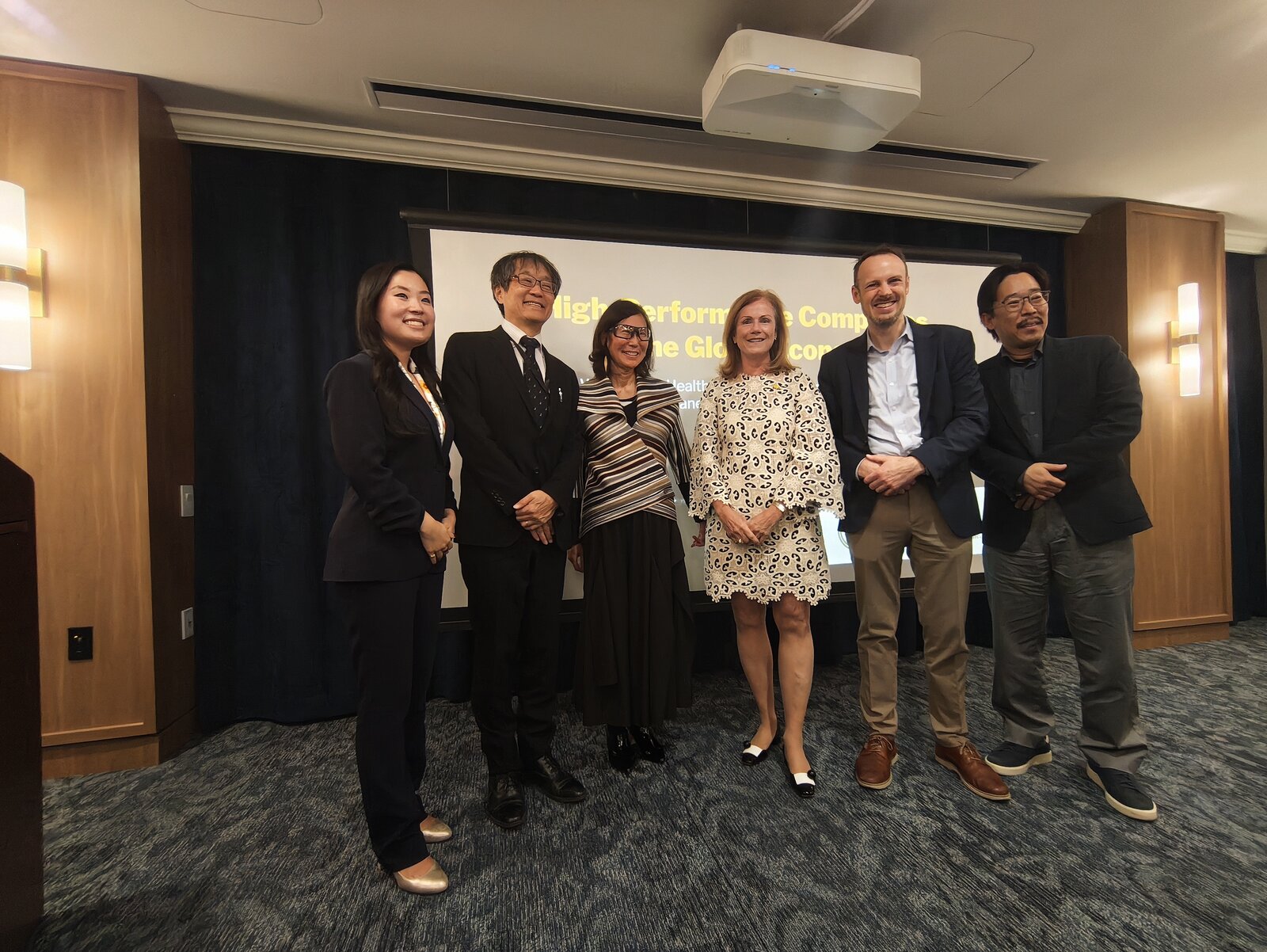
On Wednesday, Oct. 28, The Nippon Club in Manhattan hosted “High-Performance Companies in the Global Economy — Why Mental Health Is an Essential Strategic Priority for Japanese Subsidiaries in the U.S.” The evening focused on workplace mental health for Japanese companies in the United States. The event was co-hosted by One Mind at Work, the Columbia University Mental Health + Work Design Lab, and the Japanese Chamber of Commerce and Industry of New York (JCCI NY).
In the second half of the program, two organizations were invited to present case studies of mental health in practice: Mitsubishi Corporation (Americas) and NY Ikuei Gakuen. In May 2026, our school became one of the first schools to partner with One Mind at Work, starting with the mental health of our faculty and staff. Chairman and Principal Hidetoshi Takeda shared the journey so far and how we plan to extend the work to students and parents.
| Date | Wednesday, Oct. 28, 2026, 6-8 p.m. |
|---|---|
| Venue | The Nippon Club, New York |
| Co-hosts | One Mind at Work U.S.-Japan Coalition × Columbia University Mental Health + Work Design Lab × Japanese Chamber of Commerce and Industry of New York (JCCI NY) |
| Support | J.C.C. Fund |
WELCOME & OPENING REMARKS
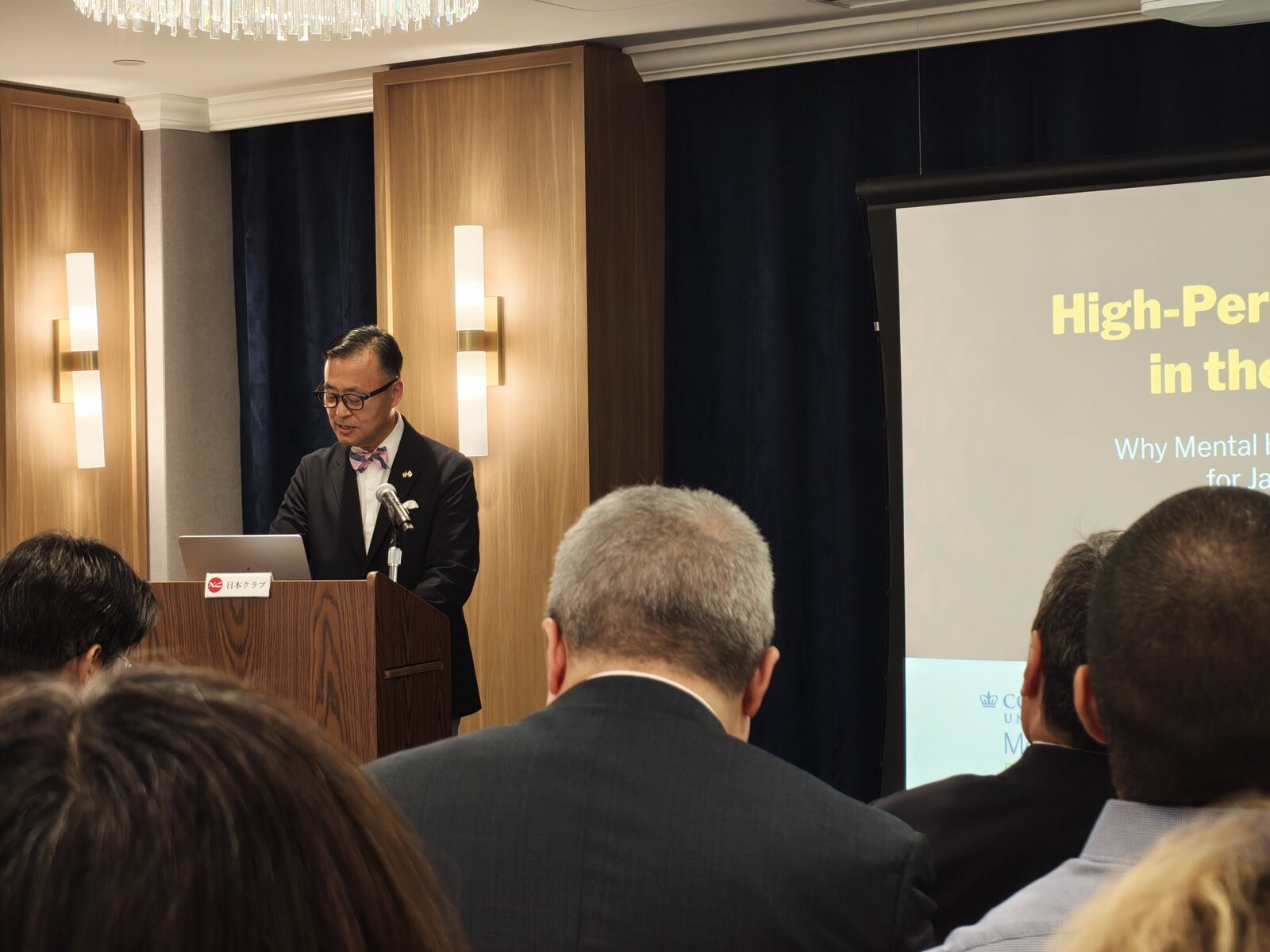
Masaaki Maeda of JCCI NY opened the evening, drawing on his 25 years of working in Japan and the U.S.: “Mental health in the workplace is a very important issue, especially for Japanese companies operating in the United States. Tonight is our first gathering, but I hope it will be the beginning of a long-term effort.”
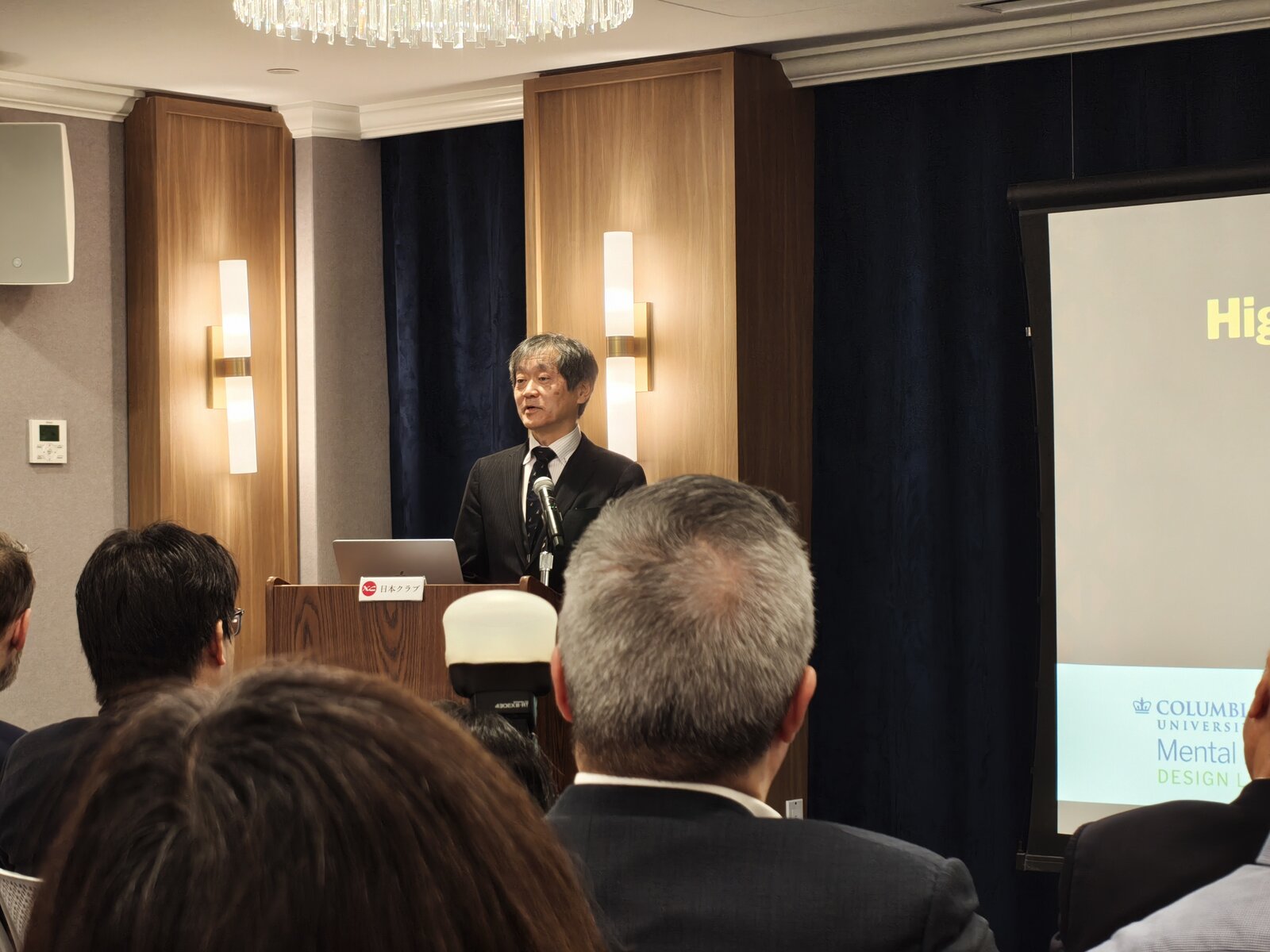
Ambassador Satoshi Katahira, consul general of Japan in New York, followed. He noted that Japanese companies in the U.S. often operate “between two worlds,” with different languages, cultures, and expectations, and then turned to life overseas.
As I was preparing for today, I started to wonder whether I should have brought my wife instead of coming by myself. After supporting our family’s move overseas, she may be more qualified to speak on this topic than I am, because overseas assignments affect not only the employees but entire families.
That’s why mental health is not simply an employee benefit. It is an investment in people, in families, and in the next generation.― Ambassador Satoshi Katahira, consul general of Japan in New York
WORKFORCE MENTAL HEALTH: FROM SCIENCE TO PRACTICE
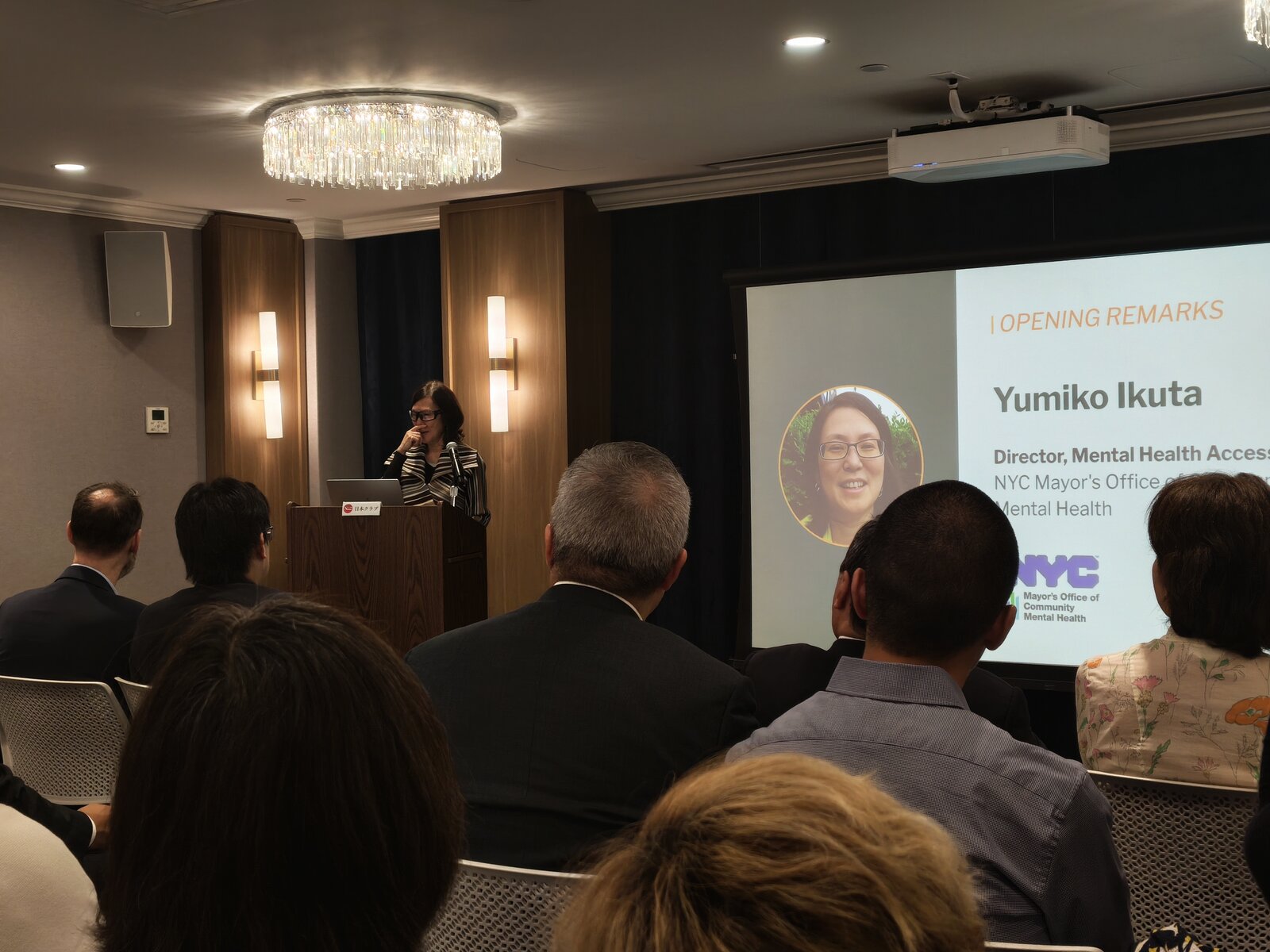
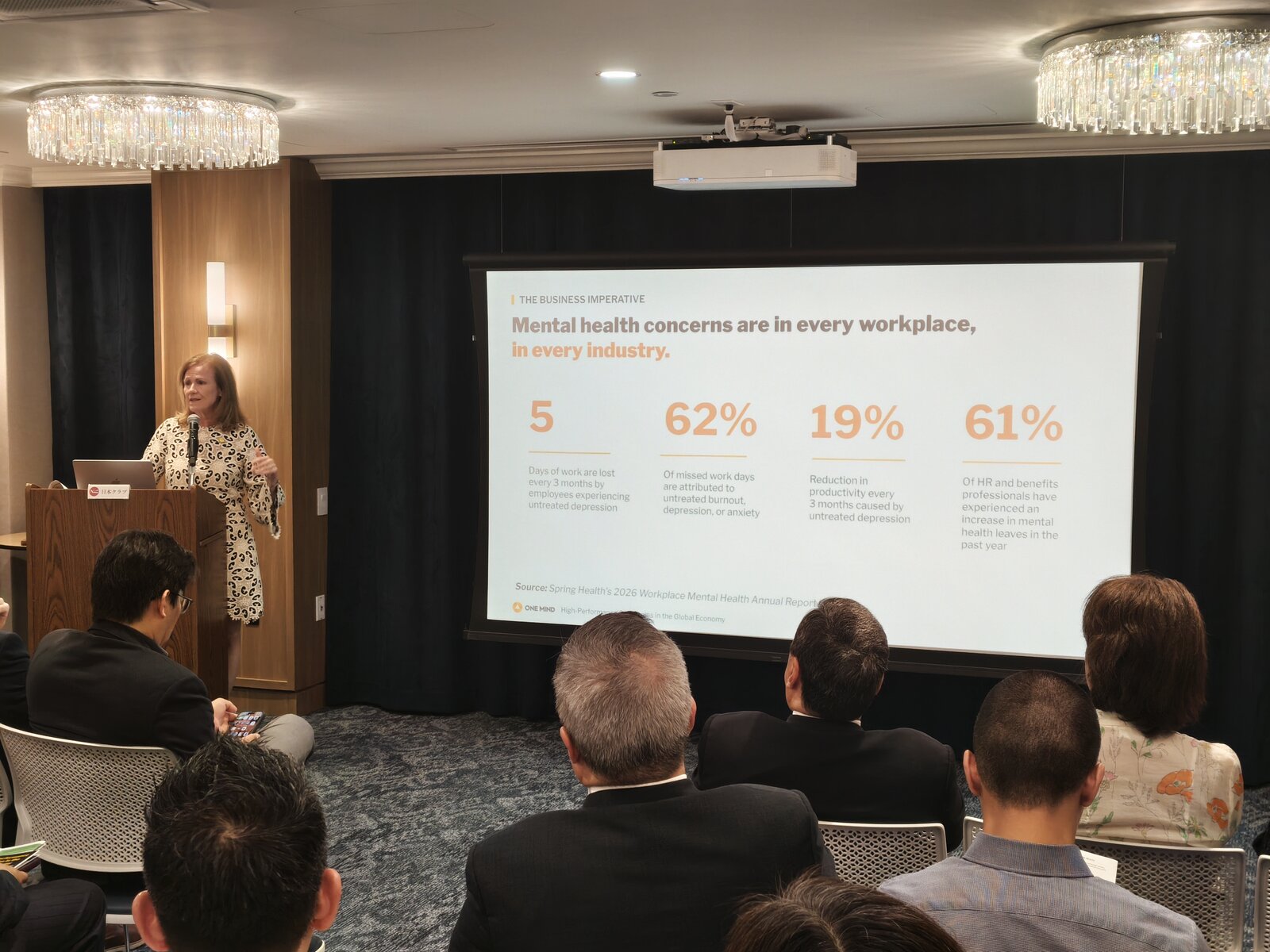
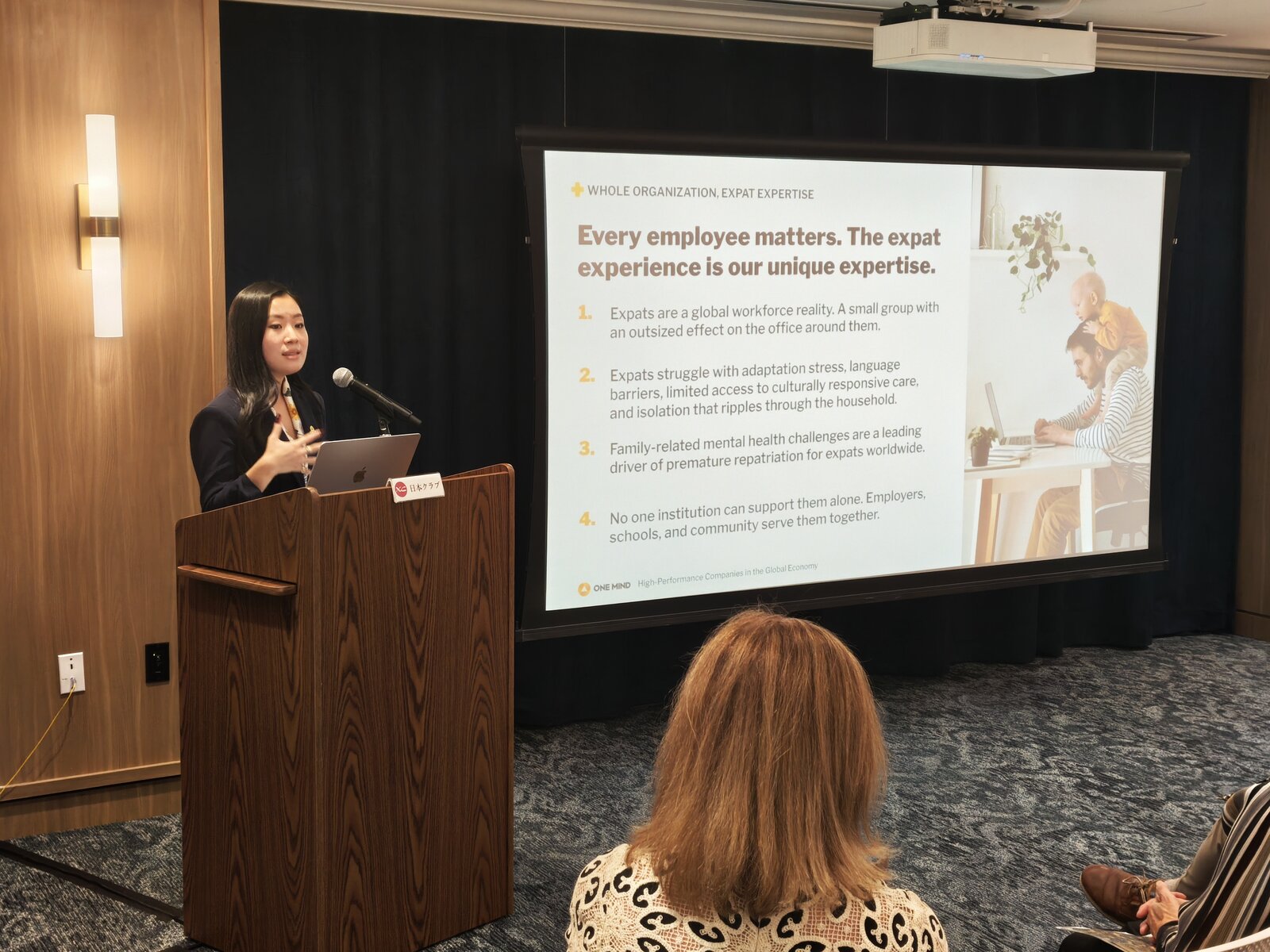
Yumiko Ikuta of the NYC Mayor’s Office of Community Mental Health shared her own experience growing up in the family of a Japanese company expat, and spoke about how stigma rooted in Japanese culture has kept people from the help they need. She also highlighted 988, the 24-hour line anyone can call in a crisis, and the value of peer support.
Dr. Kathleen M. Pike, CEO of One Mind and director of the Columbia University Mental Health + Work Design Lab, called on companies to see mental health not as an employee benefit but as a business imperative for organizational performance. In Japan, she noted, about 7 in 10 employees report serious work-related stress, and only 8% feel engaged at work, against a global average of 20%.
Haruka Kokaze, who leads One Mind’s work in Japan, spoke of growing up in Kobe, Tokyo, New York, Houston, and London as her father’s career took the family overseas, and introduced the Mental Health at Work Index, a tool for measuring where an organization stands. Built on the idea that “we can’t change what we can’t measure,” the Index looks at three areas: preventing mental health problems, promoting mental well-being, and providing the support people need.
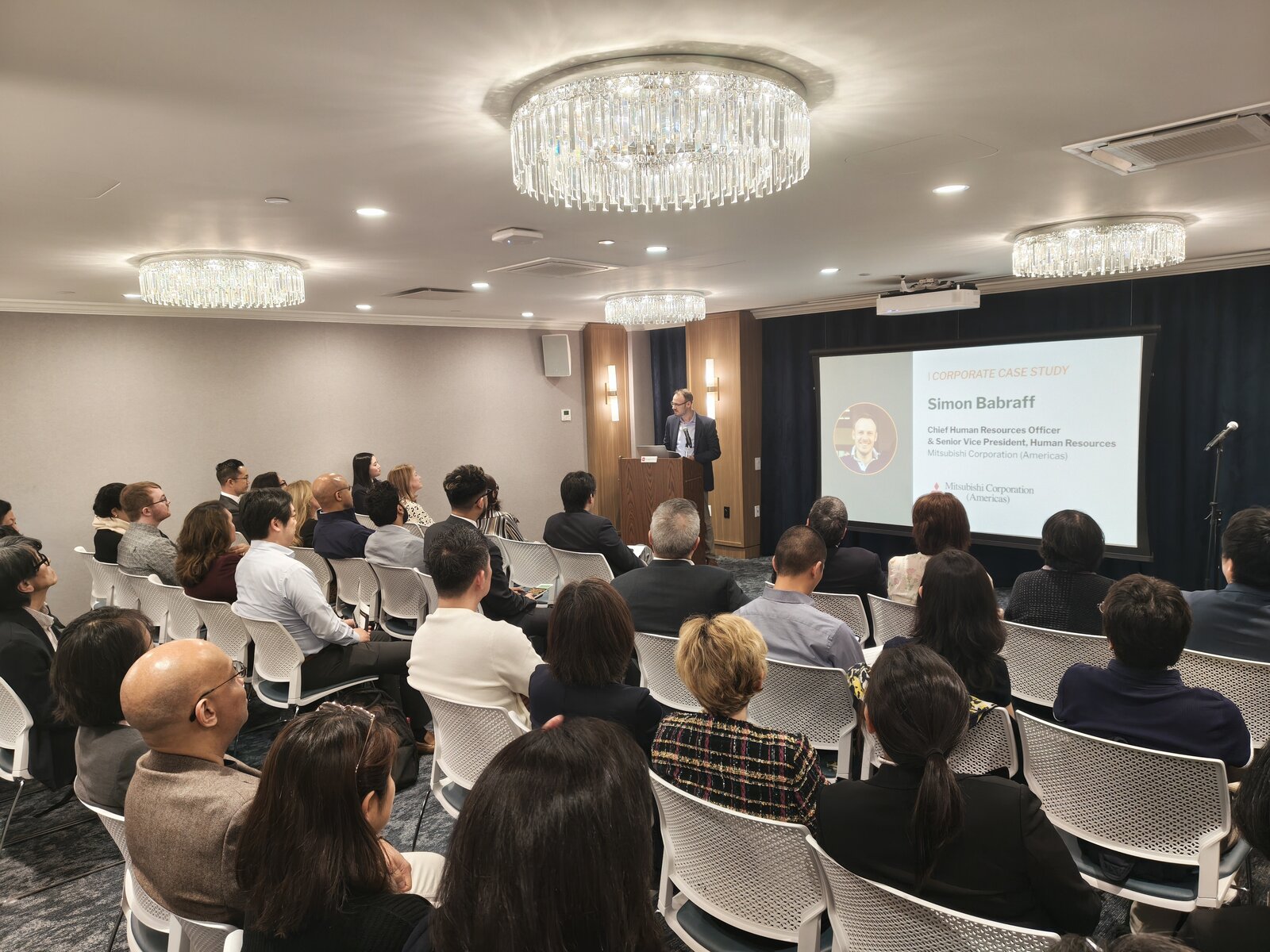
CORPORATE CASE STUDY
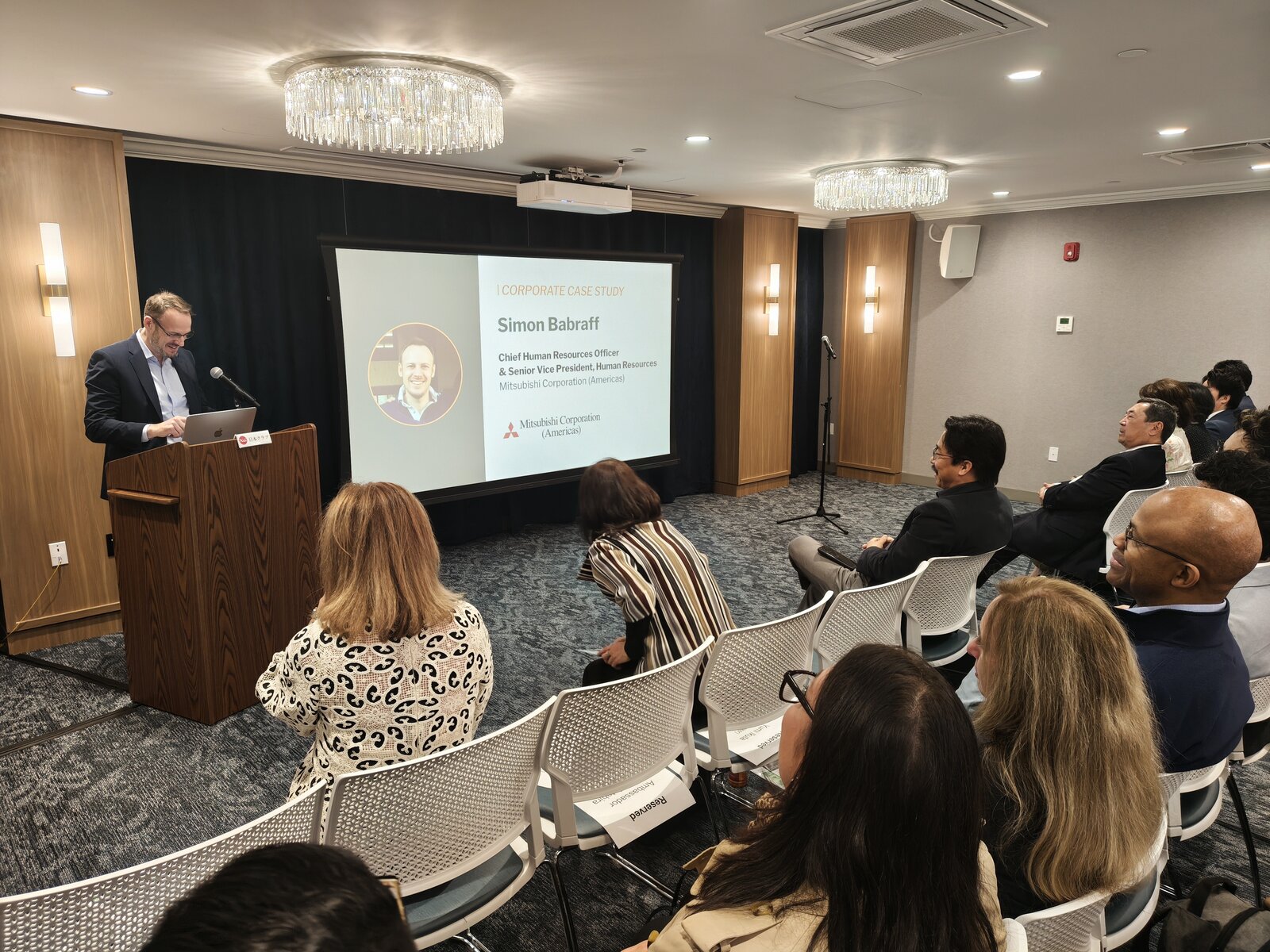
Simon Babraff, chief human resources officer at Mitsubishi Corporation (Americas), spoke about his own move to the U.S. as an expat.
“For myself it was relatively easy,” he said, “but my family struggled.” His wife had to start without a single friend, and his son struggled with English in class. Knowing his family was struggling, he hesitated to leave work early to meet with teachers, and kept it to himself. “I think a lot of people do,” he said, adding that this is especially true in the Japanese community.
SCHOOL CASE STUDY ― MENTAL HEALTH AS FOUNDATION
Next, Chairman and Principal Hidetoshi Takeda took the stage and began with a question for the room.
“Expats don’t come here alone. They come with their spouses and their children. Yumi-san and Haruka-san spoke about their struggles. So how can we avoid passing the same struggle on to the next generation? That’s the question we want to tackle.”
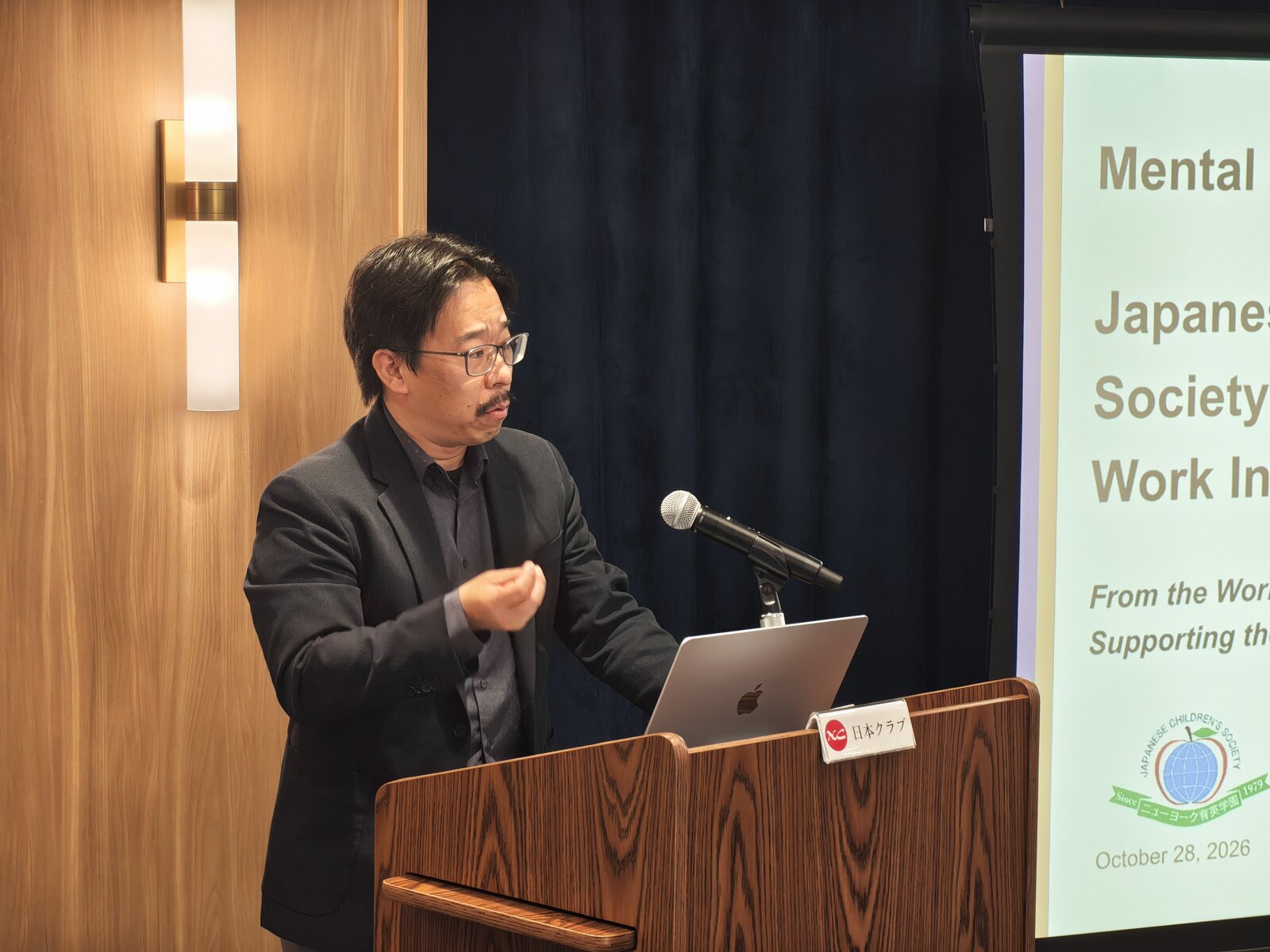
When we talk about mental health at work, we often forget the family that got on the plane with them.― Hidetoshi Takeda (from the presentation slides)
Children, parents, and teachers all affect one another. When parents are under stress at home, children see it. Many of our teachers also come from Japan and work with children in an unfamiliar environment.
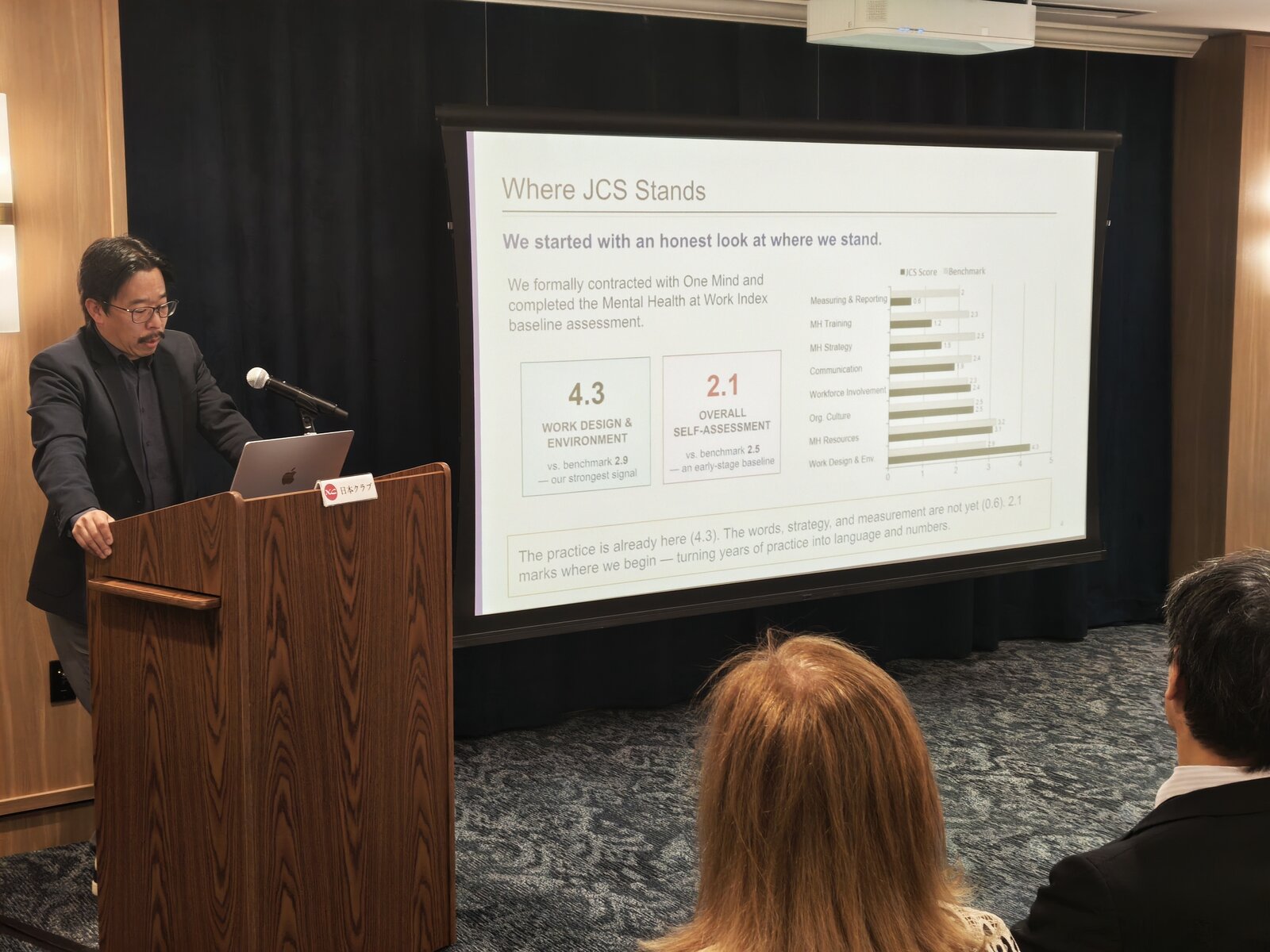
Our school formally contracted with One Mind at Work and completed the Mental Health at Work Index baseline assessment. Takeda shared the results openly.
As his slide put it, “The practice is already here.” What is missing is the words, the strategy, and the measurement. Takeda described the 2.1 as the starting point for turning years of practice into language and numbers.
He then introduced the three phases for moving the work forward.
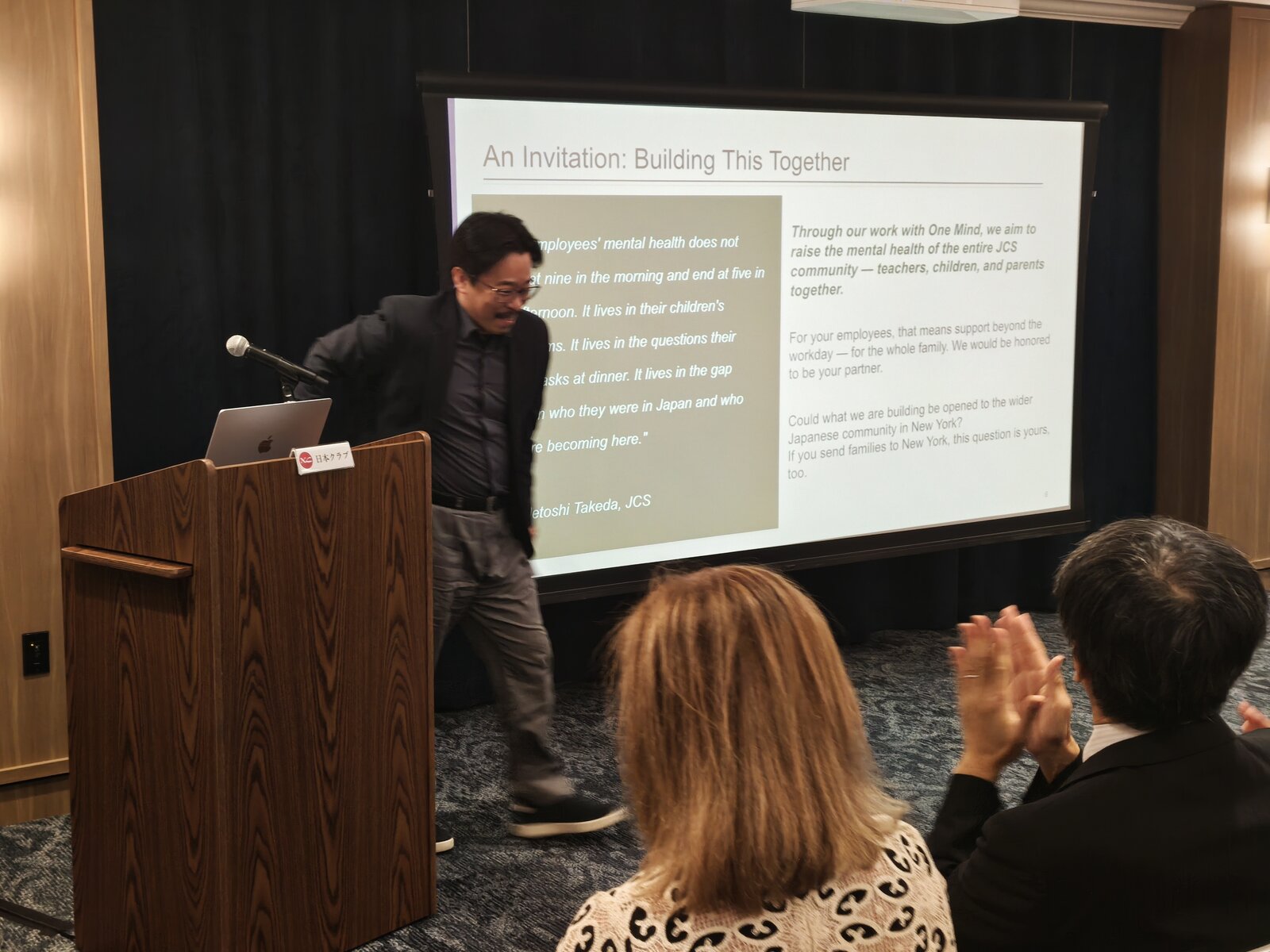
Finally, Takeda turned to the companies in the room with a challenge.
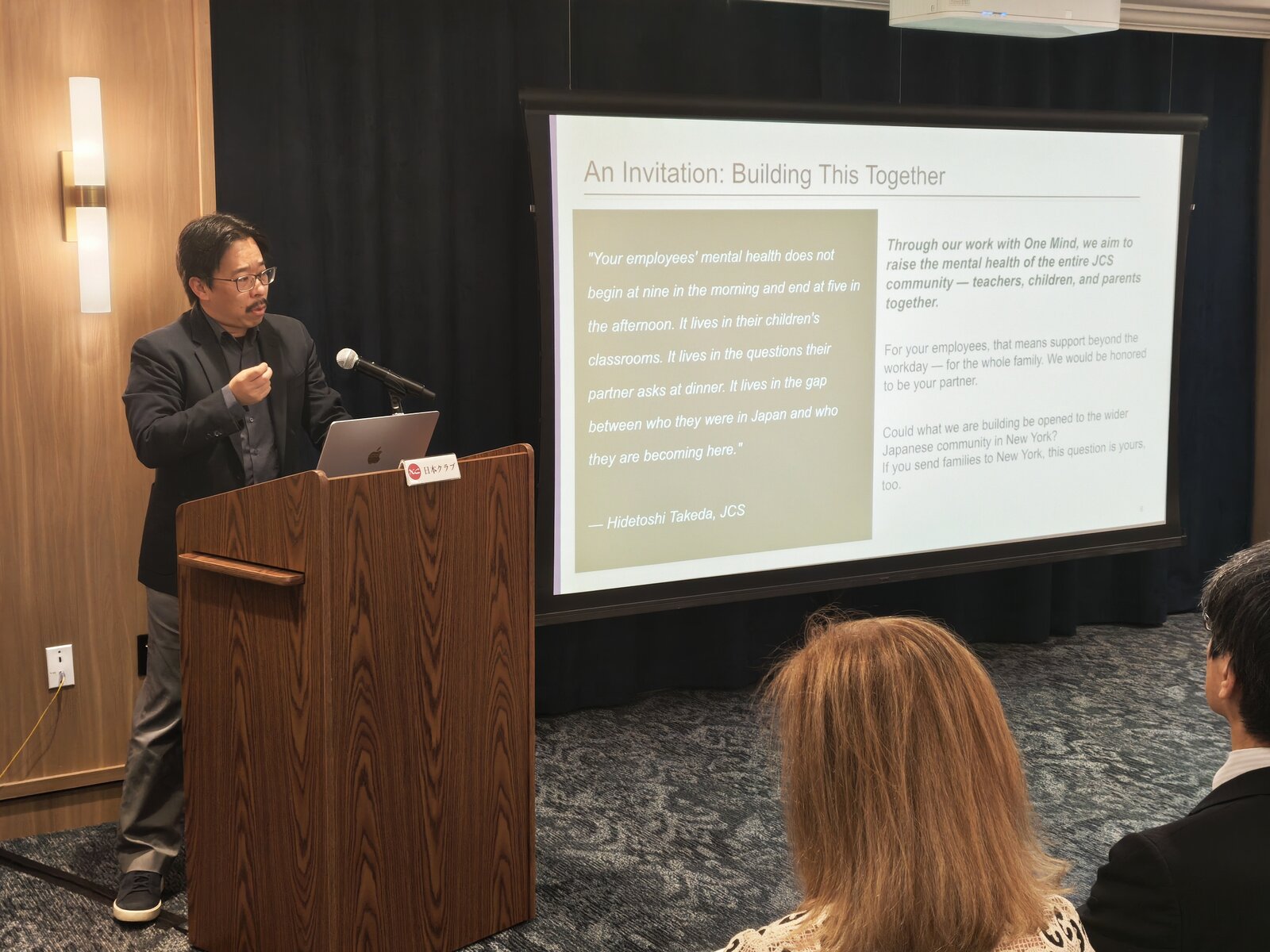
“When we talk about mental health in the work environment, it might be about nine to five on weekdays, but mental health care doesn’t stop there. How to take care of it, both inside and outside the workplace, is the collaboration we would like to offer as a school. The kids we are educating are your employees’ kids. At the same time, we are raising the kids who could be your global talent for the next generation. So please make an investment.”
Your employees’ mental health does not begin at nine in the morning and end at five in the afternoon. It lives in their children’s classrooms. It lives in the questions their partner asks at dinner. It lives in the gap between who they were in Japan and who they are becoming here.― Hidetoshi Takeda (from the presentation slides)
Read Takeda’s full talk (English / Japanese) →
FROM ONE MIND
Introducing Takeda, Dr. Pike described our school as “among the newest One Mind at Work members,” which “under Takeda-san’s leadership has completed the Index” and is building a strategy around its strengths and opportunities for growth. She explained the thinking behind our approach: “It’s very hard for the students to be doing better than their faculty and staff. So we think about faculty and staff as the backbone of this institution, and prepare them to support the mental health and well-being of their students.”
Closing the evening, Dr. Pike offered this thought: “The quickest assessment of whether an organization is really paying attention to its workforce is to ask myself: would I want my child or my grandchild to work there?”
WHAT’S NEXT
“By working with One Mind, we know where to improve. Hopefully by next year, when we speak to you again, our school will be better, and our kids, our teachers, and you as parents will all be happier.” With these words, Takeda concluded his presentation.
Together with One Mind at Work, NY Ikuei Gakuen will continue to support the mental health of our faculty and staff, students, and parents as one connected community.