
Calligraphy and Ikebana
Two “Ways” to Savor the Autumn of the Arts
Autumn special activities for grades 1–6 in the elementary division of our International School
Autumn is a season for reading, for sports, and for good food. And it is also a season for the arts.
Japan has many traditional arts whose names end in dō, “the Way”: shodō (calligraphy), kadō (flower arrangement), sadō (the tea ceremony), and more. They are about more than polishing a skill; they also value the state of mind with which one faces things. That is the world of the “Way.”
The elementary division of our International School holds special activities every spring and autumn. This spring, the children tried hip-hop dance and shogi (Japanese chess): a street culture born in New York, and a game of the mind handed down in Japan. The children threw themselves wholeheartedly into these two completely different worlds.
Then, on September 22 and 23, we held our autumn special activities for grades 1 through 6. The theme was calligraphy and ikebana. Through these two “Ways,” we savored the autumn of the arts.
Day 1 CalligraphyTuesday, September 22
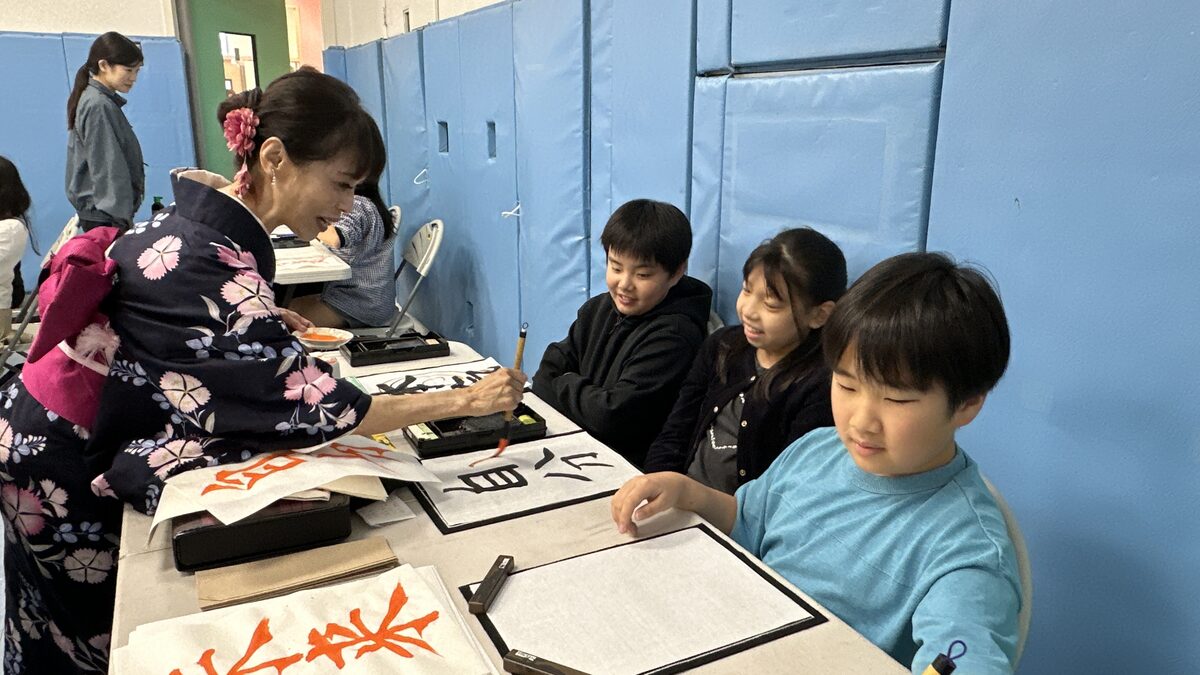
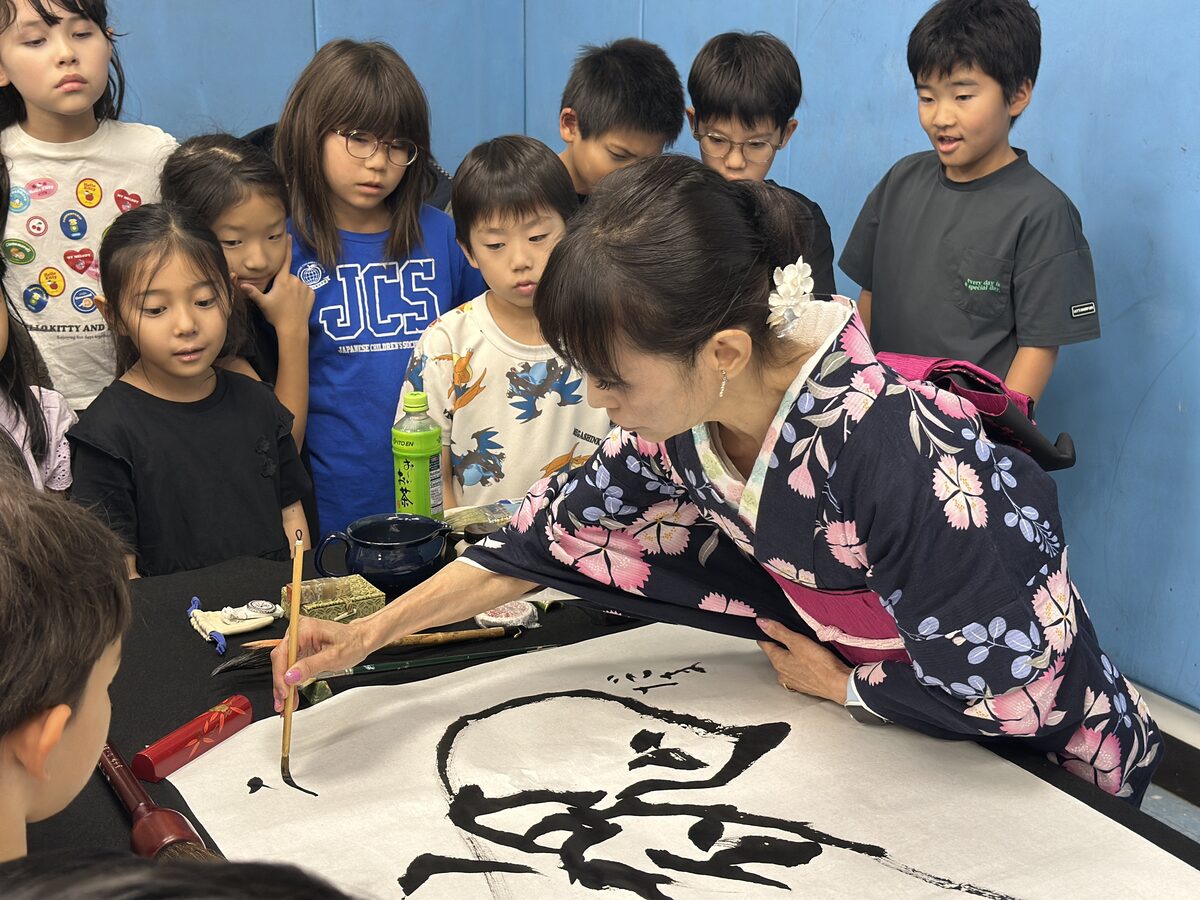
On the first day, we welcomed calligrapher Rihaku Inoue. Based in New York and Japan, Rihaku Sensei combines traditional brush technique with projection mapping and VR in “3D Calligraphy,” expanding calligraphy into a spatial art.
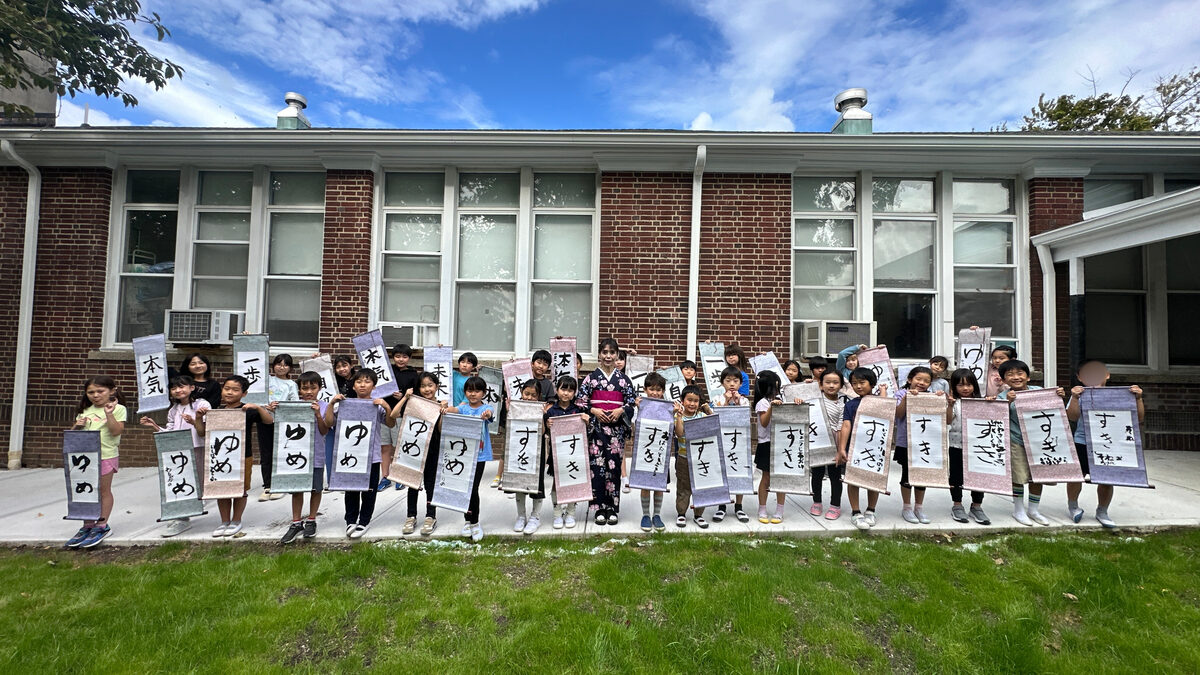
The theme of the calligraphy session was “Kotodama” (こと魂). Rather than simply writing characters neatly, the children thought carefully about how each word came to be and what it means, and put the feelings held in those characters into their brushes. They have calligraphy lessons regularly, but this was their first time writing on a hanging scroll, and the classroom was filled with an unusual sense of tension.
As practice went on, voices rose: “I want to practice more!” “How can I write it better?” Sheet after sheet, each child faced their own writing in earnest. Finally, they wrote their characters on hanging scrolls, completing works to display at home. It was a day of feeling the power of words through the tip of the brush.
Visit Rihaku Inoue’s website here
Day 2 IkebanaWednesday, September 23
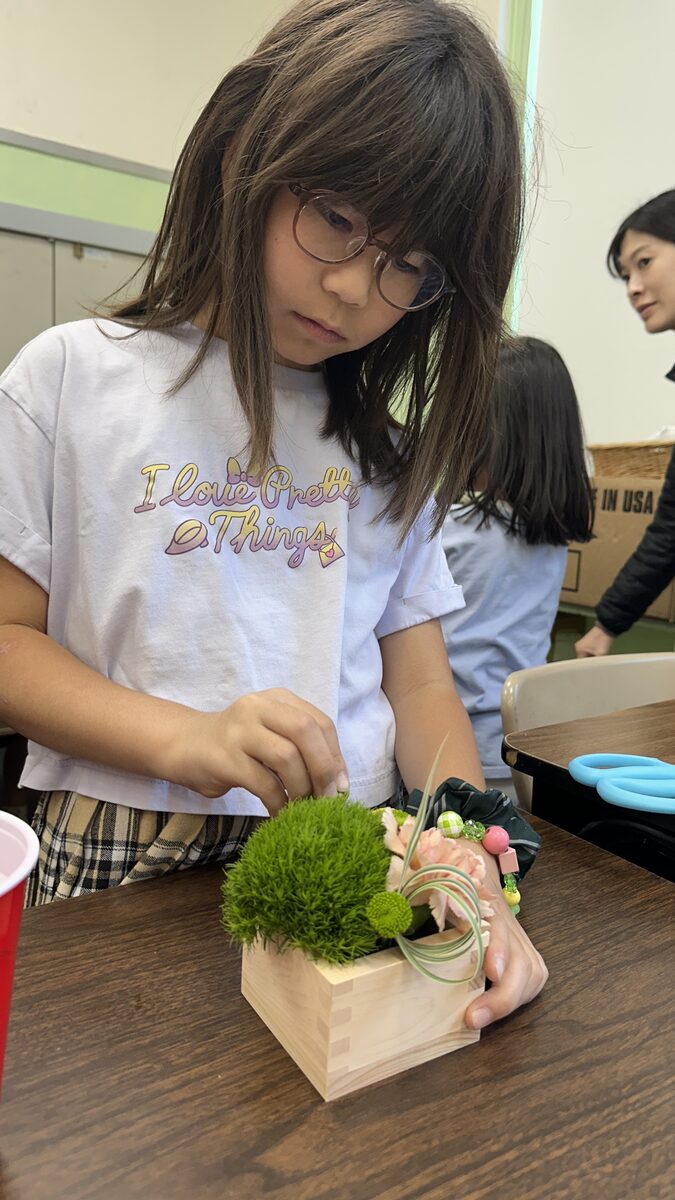
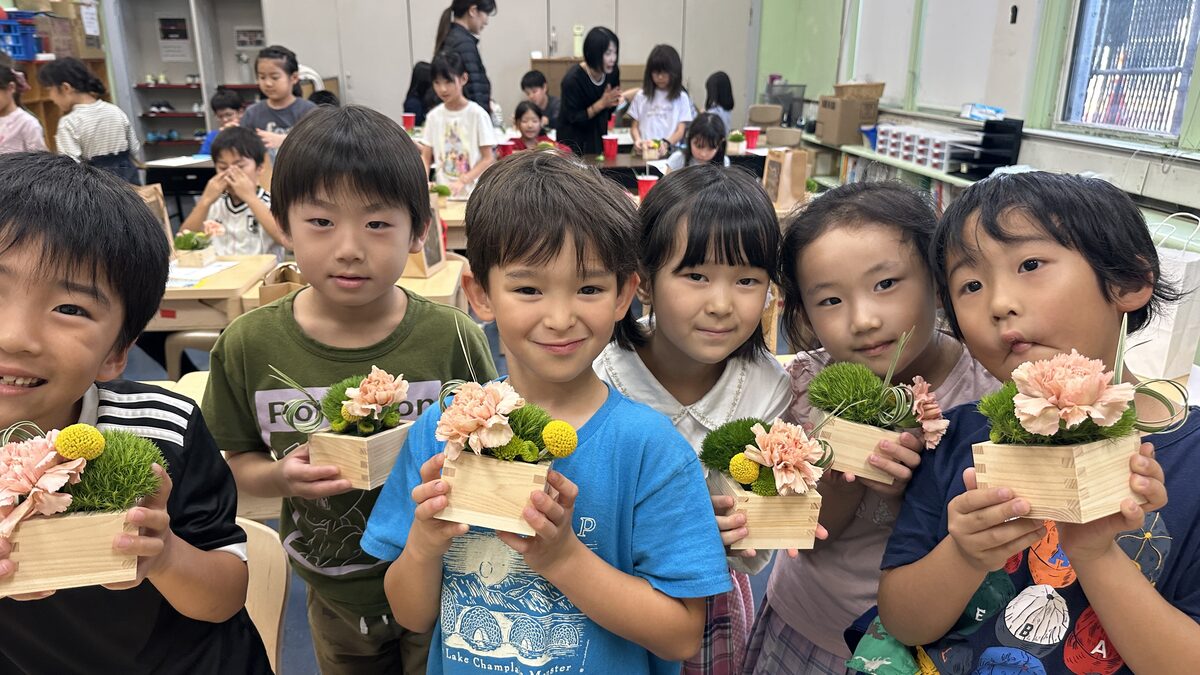
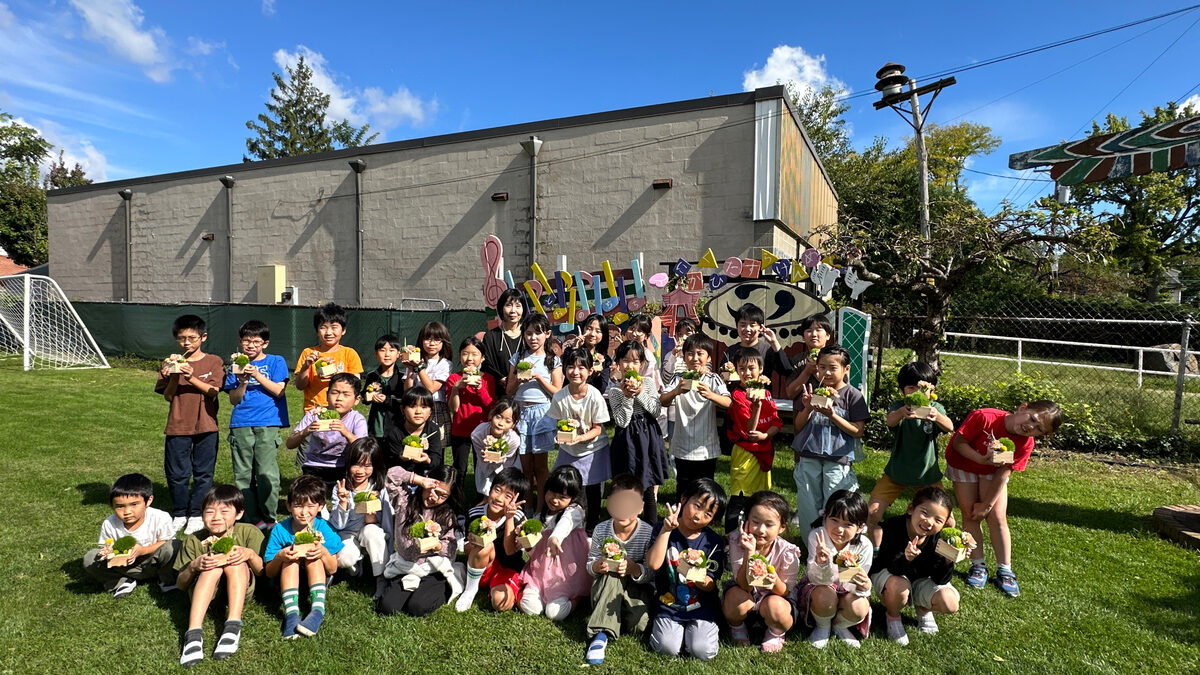
On the second day, the scene shifted to the world of ikebana. We welcomed ikebana artist Komi Hatazaki, and the children tried making masu-bana, flower arrangements in wooden masu boxes. Hatazaki Sensei is active throughout the city, displaying ikebana in Japanese restaurants and cafés in New York.
Even before the session began, the children were fascinated by the masu boxes and flowers they were seeing for the first time. “What flower is this?” “How do you do it?” They gathered around the teacher, and the questions never stopped.
The origins of ikebana go back some 600 years. It is said to have begun as a way of arranging seasonal flowers so they could be enjoyed indoors as well. After hearing about the different schools and styles of arrangement, it was finally the children’s turn. Students in grades 3 to 6 also tried mizukiri, cutting the stems under water.
Where calligraphy puts one’s feelings into written characters, ikebana is an art that brings out the beauty of the flowers themselves. Both are a “Way,” yet the approach is completely different, and the children may well have noticed this.
Visit Komi Hatazaki’s Instagram here
Precisely because we are in New York, far from Japan, Japanese culture feels all the more fresh. Surrounded by other cultures, we can see the beauty and depth of Japan in a new light.
Children from many different backgrounds hold the same brush and face the same flowers. This experience leads not only to “knowing” Japanese culture, but to the ability to speak about its value in their own words.
Picking up the brush again and again, wanting to get better; asking question after question out of curiosity: both are the very spirit of taking on a challenge. Cherishing their roots while spreading their wings into the world amid diversity: this autumn, the children surely took that first step.
Our heartfelt thanks to Rihaku Inoue and Komi Hatazaki for their guidance.